---
description: "Relative humidity (%RH), grains per pound, and now, dew point temperature: All three are ways to measure moisture in the grow room."
title: "Water Vapor in Grow Rooms: Moisture, and How to Measure It Part III: Dew Point Temperature"
image: https://www.questclimate.com/wp-content/uploads/2015/12/dew-on-grass-1369328.jpg
---
[Skip to Content](#content)
To provide the best experiences, we use technologies like cookies to store and/or access device information. Consenting to these technologies will allow us to process data such as browsing behavior or unique IDs on this site. Not consenting or withdrawing consent, may adversely affect certain features and functions.
No, thanks Accept
# Water Vapor in Grow Rooms: Moisture & How to Measure It
## Part III: Dew Point Temperature
There are three ways to measure moisture in a grow. [Relative humidity](https://www.questclimate.com/water-vapor-grow-rooms-moisture-measure-part-relative-humidity/) (%RH), [grains per pound](https://www.questclimate.com/water-vapor-in-grow-rooms-moisture-and-how-to-measure-it-part-2-grains-per-pound/), and now, dew point temperature.
### **What is dew point temperature?**
Dew point temperature, or simply “dew point,” is the temperature at which the air becomes saturated with water vapor. It’s a balance: the water vapor in the air is in equal balance to liquid water so that water vapor condenses (returns to liquid state) at exactly the same rate it’s evaporating when dew point is reached. When relative humidity (%RH) is at 100%, the measured temperature then is the dew point temperature. Dew point and %RH are linked at that point.
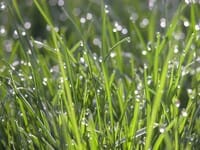
Drop the temperature below the dew point, and liquid water will begin to condense on solid surfaces. You’ve probably seen it as morning dew on grass.
### **Why is dew point temperature an important humidity measure in your grow room?**
While %RH measures the percentage saturation of water in air at a particular temperature, it changes. The warmer the air, the more moisture it can hold. The cooler the air, the less it can hold. It is called **relative humidity** because it measures the amount of moisture in the air at present compared to the maximum amount it can hold. For example, 70% RH is 70% of the maximum amount of moisture the air can hold. When the amount of moisture in the air stays the same, relative humidity goes down as temperature rises, and goes up as the temperature cools.
By contrast, dew point is an **absolute** measure of humidity in the air, not a relative one. The dew point measure of moisture in the air stays the same regardless of temperature. This (as long as more moisture is not actually added or taken out).
Here’s an example showing dew point linked to %RH at saturation:
At a temperature of 68°F, 1000 g (2.20 lbs.) of air can hold about 15 g of moisture at 100% saturation, or 100% RH. Remember that the temperature of air at 100% RH gives us the dew point of that air.
We have now discussed 3 ways to describe the air in the above example:
1. 68°F and 100% RH
2. 105 gpp (comes from 231 gr / 2.20 lbs.)
3. 68°F dew point.
Now, as the temperature rises, the %RH will fall, because warmer air can hold more moisture – but the dew point doesn’t change, as long as moisture is not added or taken out (the same goes for the gpp reading).
### **Keeping water vapor in the air at proper levels**
Knowing dew point temperature can be especially important at night. With lights off and temperatures cooling, condensation can become a problem. (Nighttime temperatures should be above 60 degrees to avoid stressing plants, but cooler than daytime temperatures, with fluctuations of no more than about 9 to 18°F, to encourage growth.) Knowing the dew point temperature of your air allows you to judge whether your nighttime temperatures will cause condensation to form on your plants. Watching your %RH climb toward 100% would tell you the same thing, but if you know your nighttime temperature, dew point lets you predict condensation.
Published on Dec 10 2015
Last Updated on Jun 02 2026
Categories: [Grow Room Setup](https://www.questclimate.com/category/growing-cannabis/grow-room-setup/), [High Plant Yield](https://www.questclimate.com/category/high-plant-yield/), [Mildew](https://www.questclimate.com/category/mildew/), [Mold](https://www.questclimate.com/category/mold/), [Reclaiming water](https://www.questclimate.com/category/reclaiming-water/)
Older Post [Some state companies find opportunity in growing market for legal marijuana
](https://www.questclimate.com/some-state-companies-find-opportunity-in-growing-market-for-legal-marijuana/)
Newer Post [Water Vapor in Grow Rooms: Moisture, and How to Measure It – Part II: Grains per Pound (GPP)
](https://www.questclimate.com/water-vapor-in-grow-rooms-moisture-and-how-to-measure-it-part-2-grains-per-pound/)
![]()
```json
{"@context":"https:\/\/schema.org","@graph":[{"@type":"Article","@id":"https:\/\/www.questclimate.com\/water-vapor-in-grow-rooms-moisture-and-how-to-measure-it-part-iii-dew-point-temperature\/#article","isPartOf":{"@id":"https:\/\/www.questclimate.com\/water-vapor-in-grow-rooms-moisture-and-how-to-measure-it-part-iii-dew-point-temperature\/"},"author":{"name":"Keith Reagan","@id":"https:\/\/www.questclimate.com\/#\/schema\/person\/e898ca82a7b40c474788e9b8ffa9ae94"},"headline":"Water Vapor in Grow Rooms: Moisture, and How to Measure It Part III: Dew Point Temperature","datePublished":"2015-12-10T19:35:33+00:00","dateModified":"2026-06-02T19:41:49+00:00","mainEntityOfPage":{"@id":"https:\/\/www.questclimate.com\/water-vapor-in-grow-rooms-moisture-and-how-to-measure-it-part-iii-dew-point-temperature\/"},"wordCount":541,"commentCount":0,"publisher":{"@id":"https:\/\/www.questclimate.com\/#organization"},"image":{"@id":"https:\/\/www.questclimate.com\/water-vapor-in-grow-rooms-moisture-and-how-to-measure-it-part-iii-dew-point-temperature\/#primaryimage"},"thumbnailUrl":"https:\/\/www.questclimate.com\/wp-content\/uploads\/2015\/12\/dew-on-grass-1369328.jpg","articleSection":["Grow Room Setup","High Plant Yield","Mildew","Mold","Reclaiming water"],"inLanguage":"en-US","potentialAction":[{"@type":"CommentAction","name":"Comment","target":["https:\/\/www.questclimate.com\/water-vapor-in-grow-rooms-moisture-and-how-to-measure-it-part-iii-dew-point-temperature\/#respond"]}],"copyrightYear":"2015","copyrightHolder":{"@id":"https:\/\/www.questclimate.com\/#organization"}},{"@type":"WebPage","@id":"https:\/\/www.questclimate.com\/water-vapor-in-grow-rooms-moisture-and-how-to-measure-it-part-iii-dew-point-temperature\/","url":"https:\/\/www.questclimate.com\/water-vapor-in-grow-rooms-moisture-and-how-to-measure-it-part-iii-dew-point-temperature\/","name":"Water Vapor in Grow Rooms: Part III: Dew Point Temperature","isPartOf":{"@id":"https:\/\/www.questclimate.com\/#website"},"primaryImageOfPage":{"@id":"https:\/\/www.questclimate.com\/water-vapor-in-grow-rooms-moisture-and-how-to-measure-it-part-iii-dew-point-temperature\/#primaryimage"},"image":{"@id":"https:\/\/www.questclimate.com\/water-vapor-in-grow-rooms-moisture-and-how-to-measure-it-part-iii-dew-point-temperature\/#primaryimage"},"thumbnailUrl":"https:\/\/www.questclimate.com\/wp-content\/uploads\/2015\/12\/dew-on-grass-1369328.jpg","datePublished":"2015-12-10T19:35:33+00:00","dateModified":"2026-06-02T19:41:49+00:00","description":"Relative humidity (%RH), grains per pound, and now, dew point temperature: All three are ways to measure moisture in the grow room.","breadcrumb":{"@id":"https:\/\/www.questclimate.com\/water-vapor-in-grow-rooms-moisture-and-how-to-measure-it-part-iii-dew-point-temperature\/#breadcrumb"},"inLanguage":"en-US","potentialAction":[{"@type":"ReadAction","target":["https:\/\/www.questclimate.com\/water-vapor-in-grow-rooms-moisture-and-how-to-measure-it-part-iii-dew-point-temperature\/"]}]},{"@type":"ImageObject","inLanguage":"en-US","@id":"https:\/\/www.questclimate.com\/water-vapor-in-grow-rooms-moisture-and-how-to-measure-it-part-iii-dew-point-temperature\/#primaryimage","url":"https:\/\/www.questclimate.com\/wp-content\/uploads\/2015\/12\/dew-on-grass-1369328.jpg","contentUrl":"https:\/\/www.questclimate.com\/wp-content\/uploads\/2015\/12\/dew-on-grass-1369328.jpg","width":200,"height":150,"caption":"Condensed water vapor on grass"},{"@type":"BreadcrumbList","@id":"https:\/\/www.questclimate.com\/water-vapor-in-grow-rooms-moisture-and-how-to-measure-it-part-iii-dew-point-temperature\/#breadcrumb","itemListElement":[{"@type":"ListItem","position":1,"name":"Blog","item":"https:\/\/www.questclimate.com\/blog\/"},{"@type":"ListItem","position":2,"name":"Water Vapor in Grow Rooms: Moisture, and How to Measure It Part III: Dew Point Temperature"}]},{"@type":"WebSite","@id":"https:\/\/www.questclimate.com\/#website","url":"https:\/\/www.questclimate.com\/","name":"Quest Climate","description":"","publisher":{"@id":"https:\/\/www.questclimate.com\/#organization"},"potentialAction":[{"@type":"SearchAction","target":{"@type":"EntryPoint","urlTemplate":"https:\/\/www.questclimate.com\/?s={search_term_string}"},"query-input":{"@type":"PropertyValueSpecification","valueRequired":true,"valueName":"search_term_string"}}],"inLanguage":"en-US"},{"@type":"Organization","@id":"https:\/\/www.questclimate.com\/#organization","name":"Quest Climate","url":"https:\/\/www.questclimate.com\/","logo":{"@type":"ImageObject","inLanguage":"en-US","@id":"https:\/\/www.questclimate.com\/#\/schema\/logo\/image\/","url":"https:\/\/www.questclimate.com\/wp-content\/uploads\/2023\/02\/Q-Black-Logo_Hrz_RGB_2022-02.png","contentUrl":"https:\/\/www.questclimate.com\/wp-content\/uploads\/2023\/02\/Q-Black-Logo_Hrz_RGB_2022-02.png","width":2009,"height":592,"caption":"Quest Climate"},"image":{"@id":"https:\/\/www.questclimate.com\/#\/schema\/logo\/image\/"},"sameAs":["https:\/\/www.facebook.com\/QuestClimate","https:\/\/www.instagram.com\/quest_hydro\/","https:\/\/www.linkedin.com\/company\/quest-dehumidifiers"]},{"@type":"Person","@id":"https:\/\/www.questclimate.com\/#\/schema\/person\/e898ca82a7b40c474788e9b8ffa9ae94","name":"Keith Reagan","url":"https:\/\/www.questclimate.com\/author\/keith-reagan\/"}]}
{"@context":"https://schema.org","@graph":[{"@type":"LocalBusiness","@id":"https://www.questclimate.com/#organization","name":"Quest Climate","url":"https://www.questclimate.com","logo":"https://www.questclimate.com/wp-content/uploads/2023/07/Green-Logo_Hrz_small.png","image":"https://www.questclimate.com/wp-content/uploads/2023/07/Green-Logo_Hrz_small.png","address":{"@type":"PostalAddress","streetAddress":"4201 LIEN RD.","addressLine2":"","addressLocality":"Madison","addressRegion":"WI","postalCode":"53704","addressCountry":"US"},"telephone":"1-877-420-1330","sameAs":["https://facebook.com/QuestClimate","https://instagram.com/quest_climate","https://linkedin.com/company/quest-climate","https://youtube.com/c/QuestClimate"]},{"@type":"BlogPosting","mainEntityOfPage":{"@type":"WebPage","@id":"https://www.questclimate.com/water-vapor-in-grow-rooms-moisture-and-how-to-measure-it-part-iii-dew-point-temperature/"},"headline":"Water Vapor in Grow Rooms: Moisture, and How to Measure It Part III: Dew Point Temperature","description":"In the third part of our series on grow room humidity, we explore dew point temperature. Unlike relative humidity, which fluctuates with temperature, dew point provides an absolute measure of moisture. Understanding this metric helps you predict condensation, protect your plants from moisture stress, and maintain optimal climate control in your grow room environment.","author":{"@type":"Person","name":"Keith Reagan","url":"https://www.questclimate.com/author/keith-reagan/"},"datePublished":"2015-12-10T13:35:33-06:00","dateModified":"2026-06-02T14:41:49-05:00","publisher":{"@id":"https://www.questclimate.com/#organization"},"image":{"@type":"ImageObject","url":"https://www.questclimate.com/wp-content/uploads/2015/12/dew-on-grass-1369328.jpg"},"articleSection":"Grow Room Setup"}]}
```